At a Glance
The first time someone asked me to dance, I froze and shook my head. I spent the next ten minutes wondering if I’d broken a secret rule. Spoiler: I hadn’t. They just asked someone else and had a great dance. That was my first lesson in what actually matters on the floor.
Asking for a Dance (and How to Say No)
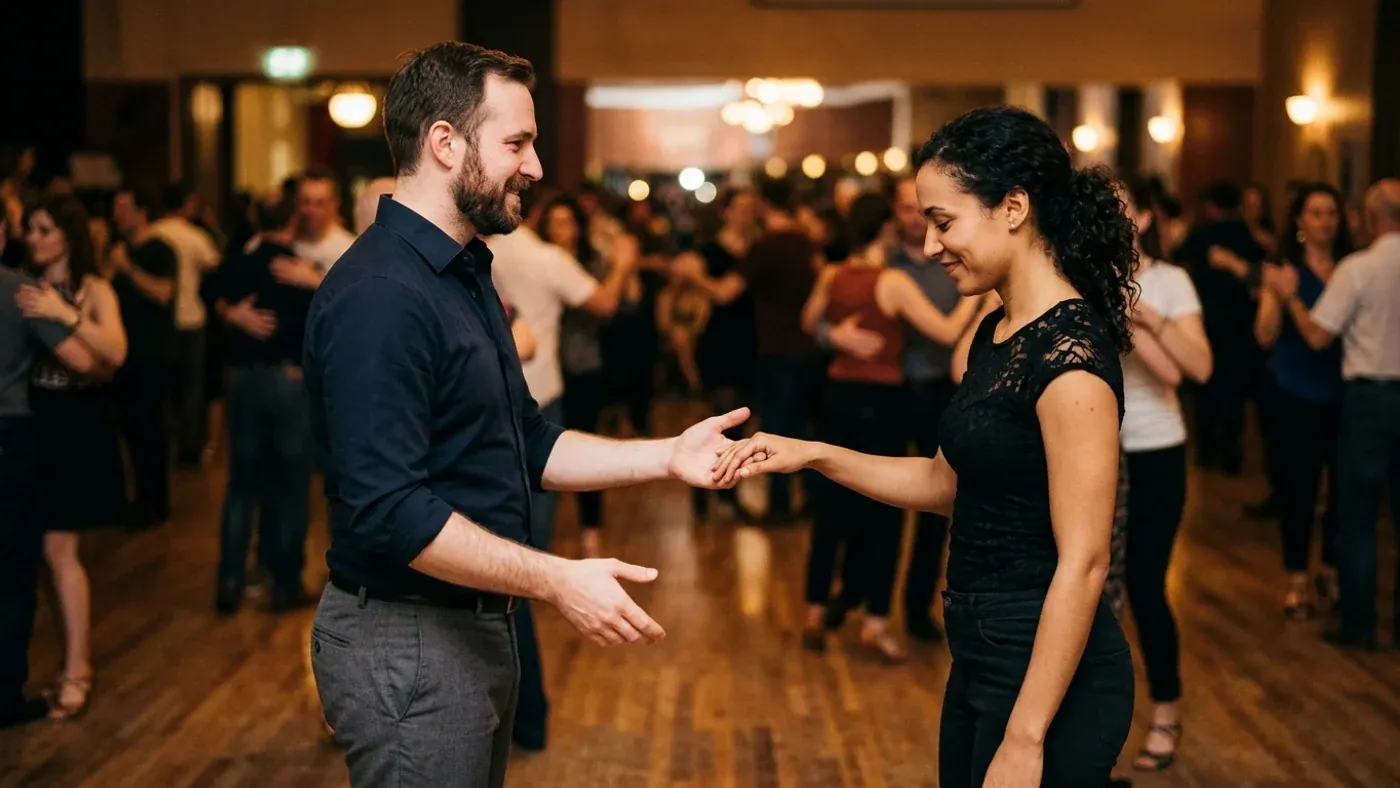
The mechanics are simpler than you think. Make eye contact, smile, and extend a hand with a simple, “Would you like to dance?” That’s it. Anyone can ask anyone, gender and experience level don’t matter. Beginners should ask experienced dancers, and vice versa. It’s how we welcome people into the scene. The key is to be visible and engaged, not waiting in a corner.
Just as importantly, you can always say no. “No, thank you” is a complete sentence, and you never owe an explanation. The only real rule is this: don’t decline one person and immediately accept a dance from someone else for the same song. If you need a break, take the whole song off. It’s the one action that makes a decline feel personal.
On the Floor: Connection and Navigation
A social dance is a conversation, not a performance. Leads, your job is to guide, not force; if a move isn’t working, let it go and try something else. Follows, your role is to respond to what’s led, not what you think should happen. Match your energy and complexity to your partner. Dancing with a beginner is a chance to focus on a clear, simple connection, which is a skill in itself.
Navigating a crowded floor is the lead’s responsibility. Keep your steps small and contained to avoid collisions. If you do bump into another couple, and you will, a quick, sincere apology is all that’s needed before you continue dancing. The goal is to adapt to the space you have, creating a safe and enjoyable dance for both you and your partner.
What to wear on the floor



Affiliate link
The Unspoken Rules of Social Hygiene
This matters more than you might think. Social dancing is a close-contact sport, and your hygiene directly impacts every partner. Deodorant is mandatory, not optional. Brush your teeth before you go out, and carry mints for later. Your partners will be grateful.
For those who sweat a lot, bringing a spare shirt is a game-changer. Changing halfway through the night is a huge courtesy. And if you’re feeling sick, please stay home. A dance floor is the perfect place to spread germs, and your community will thank you for taking the night off to recover.
Consent, Boundaries, and Ending the Dance
Partner dancing requires a constant, unspoken negotiation of consent. A “yes” to a dance is not a blanket agreement for any level of closeness or any specific move. Pay attention to your partner’s physical cues. If they maintain distance in the embrace or resist a particular movement, respect that boundary and adjust. Forcing a connection is the fastest way to ensure someone won’t dance with you again.
You can end a dance at any time, for any reason. If you feel uncomfortable, unsafe, or just aren’t feeling the connection, a simple “thank you” is all you need to politely exit the floor. You don’t need to finish the song. In healthy communities, everyone understands and respects this. If you ever experience behavior that crosses a line, please tell an organizer or a trusted regular.
The Small Things That Build a Scene
At the end of every song, thank your partner with a smile and eye contact. This small gesture is the punctuation that closes the dance, releasing you both to find new partners. It’s standard to dance one song and then rotate, which keeps the energy of the room flowing and gives everyone a chance to dance with lots of different people.
Whether you dance salsa, bachata, kizomba, or zouk, these principles create an atmosphere where people feel safe to show up, to be beginners, and to keep coming back. The etiquette isn’t about rigid rules; it’s about the small, consistent kindnesses that turn a room full of strangers into a community. Explore events on the global dance map and see for yourself.