At a Glance
The bass drops, the lights dim, and the room melts away. It’s just the steady beat and the feeling of your partner breathing in time with you. This isn’t about performance; it’s a conversation without words, led from the chest. This is kizomba.
Where It Came From: Angola to the World
Kizomba was born in Luanda, Angola, in the late 1970s and early 1980s. The word itself means “party” in the local Kimbundu language, and the dance grew from an older, faster Angolan tradition called semba. When musicians heard the slow, romantic zouk music from the Caribbean, they fused it with Angolan sounds, and dancers adapted their semba to match, creating a slower, smoother, more connected dance.
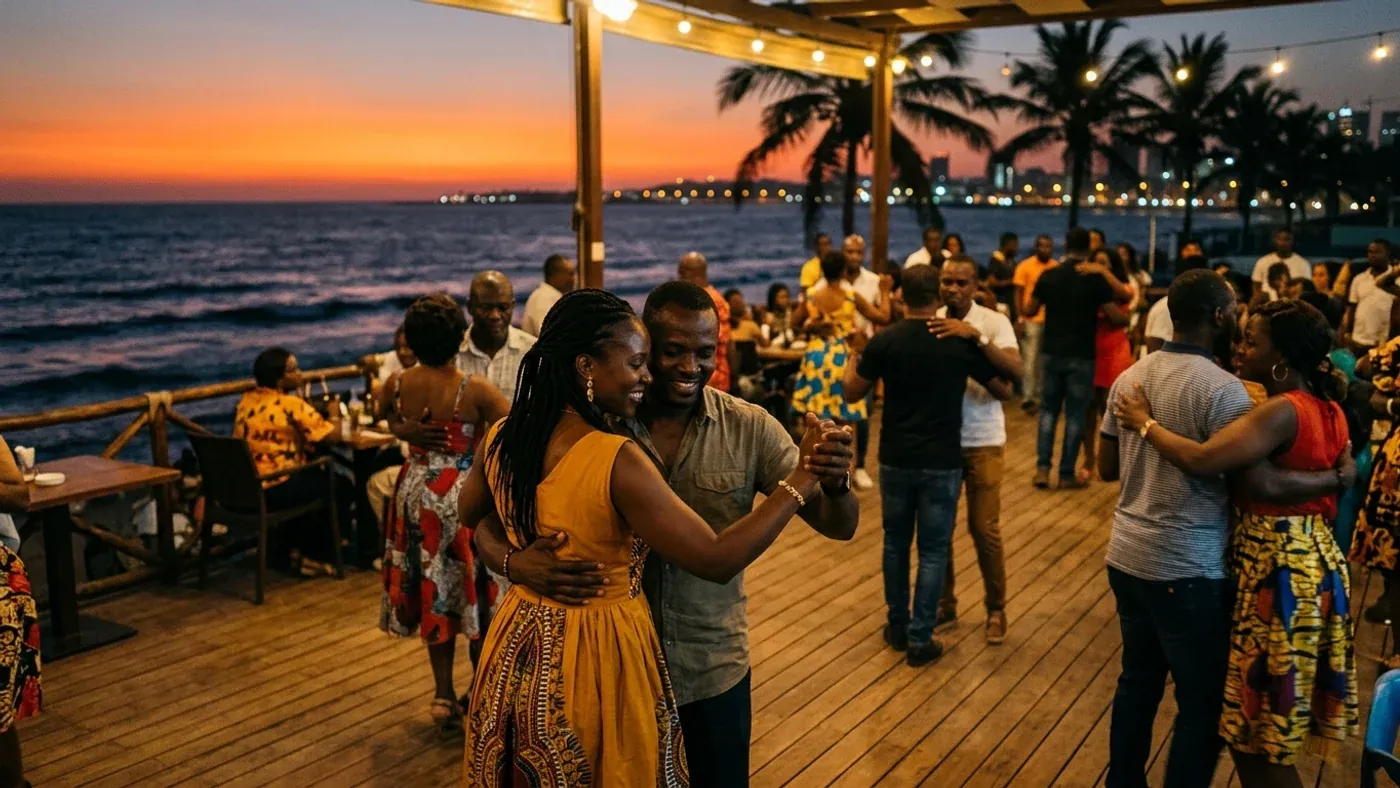
For decades, it stayed within Portuguese-speaking Africa. Its journey to the rest of the world started in Lisbon, carried by the Angolan diaspora. From there, it exploded across Europe and then the globe, driven by festival culture and the striking videos shared online. To truly understand the dance, you have to feel its roots, which you can explore in this guide to kizomba in Africa.
The Feel of the Dance
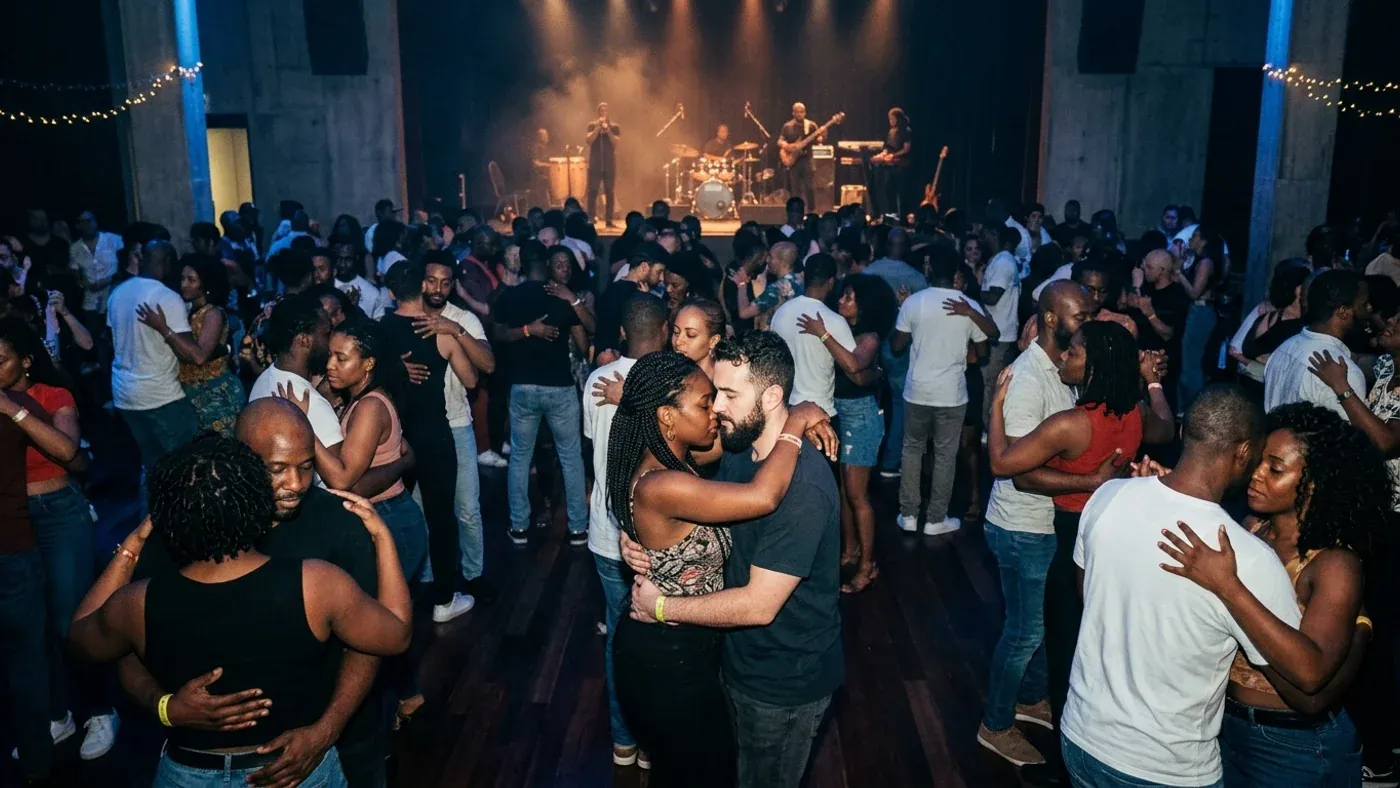
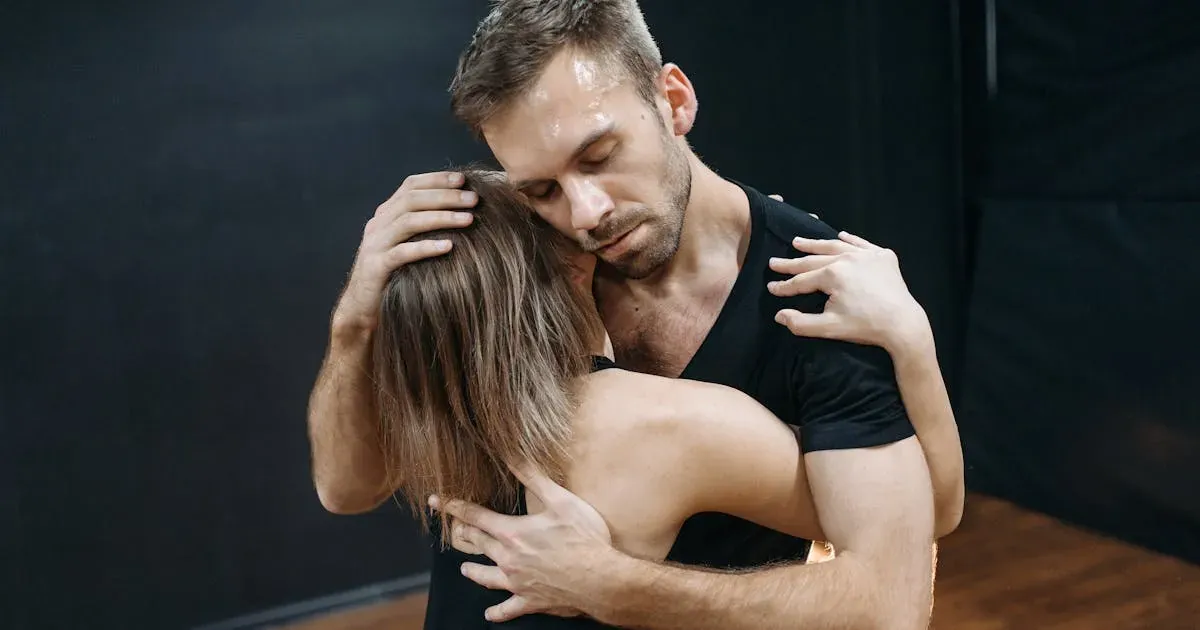
The first thing you’ll notice is the embrace. Kizomba is danced chest-to-chest, with the lead guiding entirely through the torso. There’s no arm tension, no pulling or pushing with the hands like in salsa or bachata. If the lead’s chest moves, the follower’s body responds. It’s a functional connection, not an inherently romantic one, it’s simply the language of the dance.
The basic step is just walking. A simple, three-step pattern, slow, slow, tap, that shifts your focus from complex footwork to pure musicality. This simplicity is deceptive; it’s what allows for the deep connection and subtle pauses that define the dance. It’s a meditative experience, and you can learn the fundamentals in our kizomba for beginners guide.
The Styles You’ll See on the Floor
As kizomba traveled, it evolved. What you find on the floor today is a family of related but distinct styles. The music is often the biggest clue to what you’re dancing. Knowing the difference helps you adapt and connect with any partner, on any floor. A deeper dive can be found in our Kizomba vs Urban Kiz vs Semba guide.
| Style | Vibe | Music | Key Feature |
|---|---|---|---|
| Traditional Kizomba | Smooth, grounded, circular | Angolan, PALOP artists, Semba | Flowing, continuous movement |
| Urban Kiz | Upright, linear, sharp | Ghetto Zouk, R&B, electronic remixes | Syncopations, breaks, and pauses |
| Tarraxinha | Intimate, minimalist, intense | Heavy bass, minimal melody | Body isolations with minimal steps |
This evolution is a source of passionate debate. Some feel the newer styles have lost the cultural essence of the Angolan original. Others see it as a natural, creative progression. As a social dancer, you don’t have to pick a side. Just listen to the music, feel how your partner is moving, and enjoy the conversation.
Where to Dance Kizomba
Kizomba has strongholds across Europe, often in cities with deep connections to the Portuguese-speaking world. These scenes are mature, with dedicated socials, top-tier instructors, and a steady stream of international visitors. They are the perfect places to spend time in the dance.
Paris, France
The undisputed global capital of Urban Kiz, with a massive, diverse scene that offers something every single night of the week.
Lisbon, Portugal
The European heart of traditional kizomba and semba, where the dance first took root outside of Africa. The vibe is authentic and deeply musical.
Beyond these hubs, thriving communities exist in cities like Amsterdam, London, and Munich. The best way to find a place to dance tonight is to browse events happening near you.
Browse all kizomba events


Your First Night Out
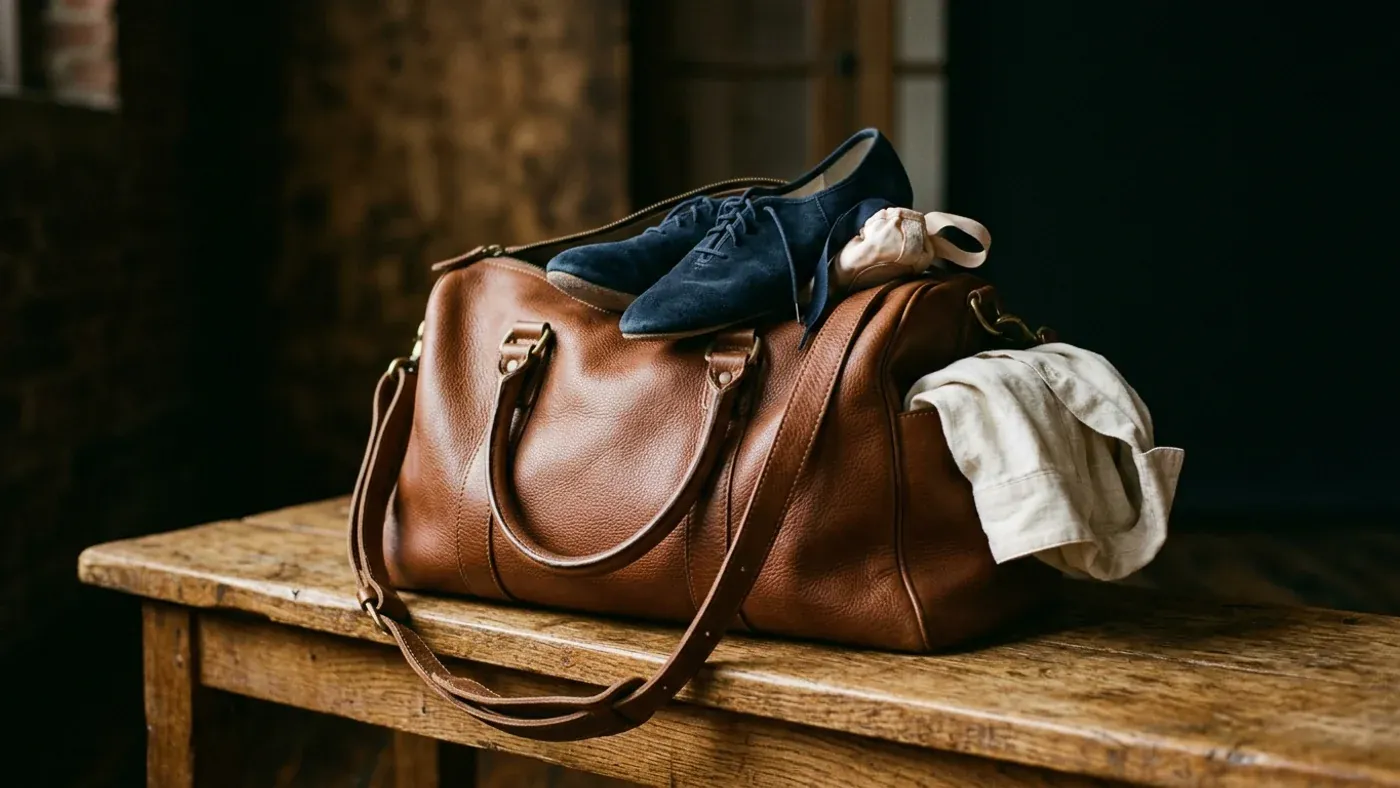
For your first social, prioritize comfort and connection. Wear clothes that are fitted but not restrictive; your partner needs to feel the lead from your torso, and baggy layers can muffle that signal. Breathable fabrics are a must. The close hold means hygiene is non-negotiable, bring a spare shirt, deodorant, and mints. Our social dance dress code guide has more tips.
The most important step is your first one: take a class. Kizomba’s connection must be felt, not just watched. Most socials have a beginner lesson beforehand, and it’s the perfect entry point. Be patient with the embrace, keep your steps small, and focus on the music. For more on navigating the social floor, check out this guide to dance floor etiquette.