At a Glance
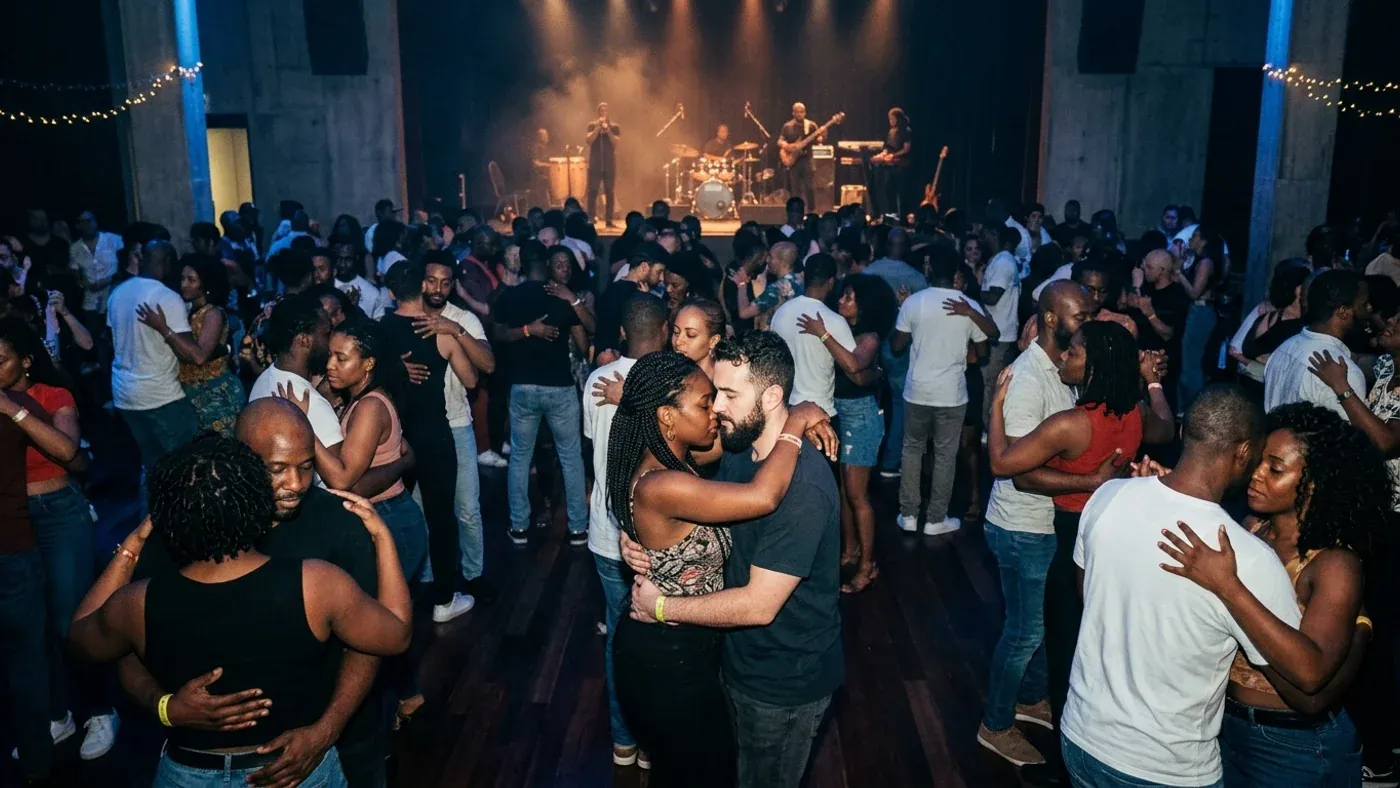
The room is dark, the beat is slow. One couple glides across the floor in a tight embrace, their feet never seeming to disconnect from the ground. Another flows past them, a ripple moving from her feet to her hair. They look similar, but they’re speaking entirely different languages.
Two Continents, One Confusing Name
Kizomba was born in Luanda, Angola, in the late 1970s. It grew from the steps of Semba, a joyful, upbeat Angolan dance, when musicians started blending local sounds with Caribbean zouk music arriving on the radio. The result was a slower, more intimate dance that kept Semba’s close embrace but found a new, smoother groove. From Angola, it traveled to Lisbon and then took over Europe.
The story of Brazilian Zouk starts with a different dance entirely: Lambada. After the global Lambada craze of the late 80s faded, dancers in Rio de Janeiro were left with a movement vocabulary they loved but no music. They found a new pulse in the same slow zouk tracks that had influenced Kizomba. As the tempo dropped, the dance transformed, and Brazilian Zouk was born. The shared word is the source of all confusion. For a deeper dive, see our guide to [Kizomba vs Urban Kiz vs Semba].
How the Music Tells the Story
Listen for thirty seconds, and the floor will tell you which dance it is. Kizomba music has a clear home base: steady electronic beats, smooth production, and vocals in Portuguese or Cape Verdean Creole. Artists like Nelson Freitas, C4 Pedro, and Mika Mendes define the sound. It’s a rhythm that invites you to walk with purpose and connection. You can find socials playing this music on our Kizomba events page.
Brazilian Zouk music is a DJ’s playground. It can be a slowed-down R&B track, an emotional acoustic cover, or a driving electronic beat. There is no single genre. The unifying factor is a continuous quality that supports the dance’s flowing, uninterrupted movement. This musical freedom is a huge part of its global appeal. Explore thousands of Zouk events worldwide to hear the variety for yourself.
The Feeling on the Floor: Grounded vs. Flowing
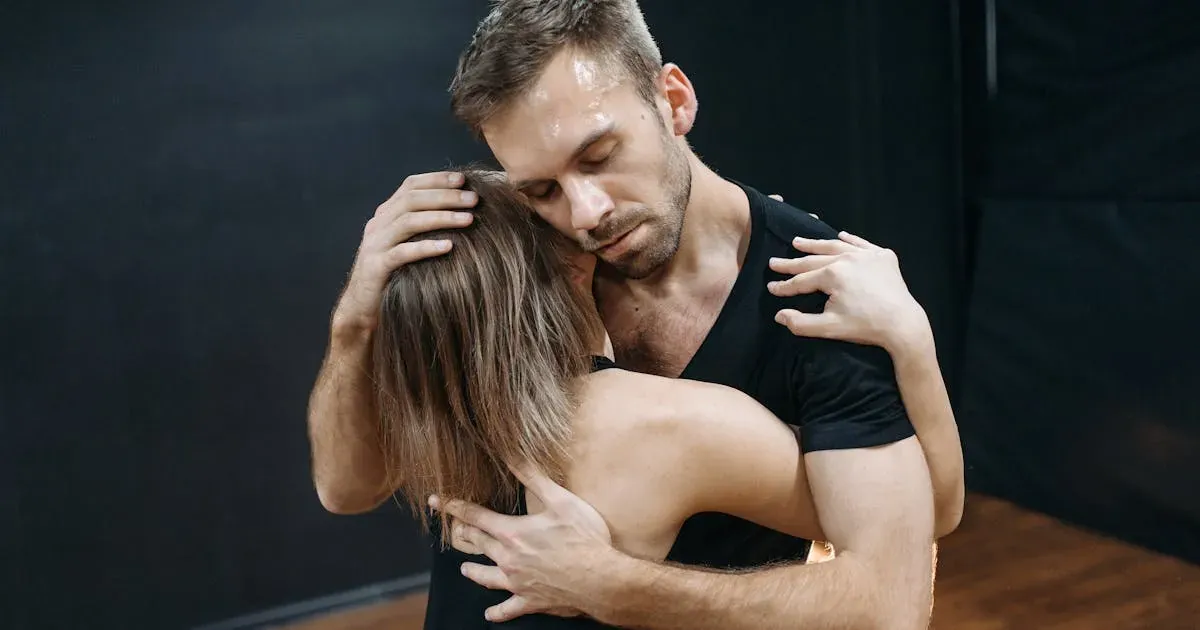
Both dances connect through the chest, but how they use that connection diverges completely. Kizomba is a grounded, walking dance built on a firm, continuous chest-to-chest embrace. The lead moves, the follow feels and steps. It’s a language of subtle shifts and shared weight, a dance often described as a walking hug. The arms play a minimal role; the conversation happens through the core.
Zouk, by contrast, is defined by its flow. The connection is more dynamic, a point of contact from which movement ripples through the body. The embrace opens and closes, allowing for turns, extensions, and the dance’s signature body waves. Travel is often lateral or circular, creating a feeling of perpetual motion. It’s less about the destination and more about the tour of the music.
| Element | Kizomba | Brazilian Zouk |
|---|---|---|
| Basic Step | '1, 2, 3, pause.' A simple, grounded walking pattern. | 'Slow, quick, quick.' A lateral, flowing step with a body wave. |
| Connection | Firm chest-to-chest embrace, minimal arm input. | Dynamic frame that opens and closes, led from the core. |
| Signature Move | Tarraxinha (subtle hip isolations in close hold). | Cambré (led upper body dips and head movements). |
| Core Vibe | Intimate, grounded, and internally focused. | Expressive, fluid, and visually dramatic. |
Where to Find Your Dance
Now that you can spot the difference, you need to find a floor. While many cities have scenes for both, some places are true global hubs. Kizomba’s heart beats strongest in Europe, especially in cities with deep ties to the Angolan and Cape Verdean diaspora. Paris, France and Lisbon, Portugal are essential destinations for any serious Kizomba dancer, offering socials every night of the week.
Paris, France
The undisputed European capital of Kizomba and its Urban Kiz evolution, with a massive, competitive, and technically brilliant scene.
Brazilian Zouk, meanwhile, has exploded globally from its roots in Rio. You’ll find passionate communities across Europe, Australia, and North America, often thriving in cities with a taste for technical, expressive partner dance. Cities like Amsterdam and London have become major European hubs for Zouk festivals and dedicated socials.
Amsterdam, Netherlands
A central hub for Zouk in Northern Europe, known for its high-level instruction, marathon-style socials, and international crowd.



Which Should You Learn First?
If the music for one style already has you hooked, follow that feeling. It’s the single best predictor of which dance you’ll stick with. If you’re truly on the fence, consider your background and your goals. Good dance floor etiquette is universal, but the learning path for each dance is quite different.
Choose Kizomba if you’re new to partner dancing and want to feel confident at a social fast. The learning curve is gentler. Choose Zouk if you have experience in other movement forms, like contemporary, ballet, or even yoga, that give you strong body awareness. For a head start, check out our Kizomba for Beginners guide. Or, if you’re ready to get started deep, explore the best Zouk festivals of 2026.
Browse all upcoming festivals